Can you talk about your research process? I'm fascinated by the way you found female empowerment through mushrooms, the mycelial network, and the way plants communicate underground. Did you set out to write about beer brewing and mushrooms, or did that come later?
It started with beer. I visited Britain's oldest brewery, in Kent, and learned about alewives — brewing was women's work for centuries. And my first thought was, of course it was. Of course women made the beer. Now look around: nearly every brewery is run by men. That little hinge of history would not let go — exactly the kind of idea Elizabeth Gilbert describes in Big Magic, the one that keeps tapping you on the shoulder until you agree to write it.
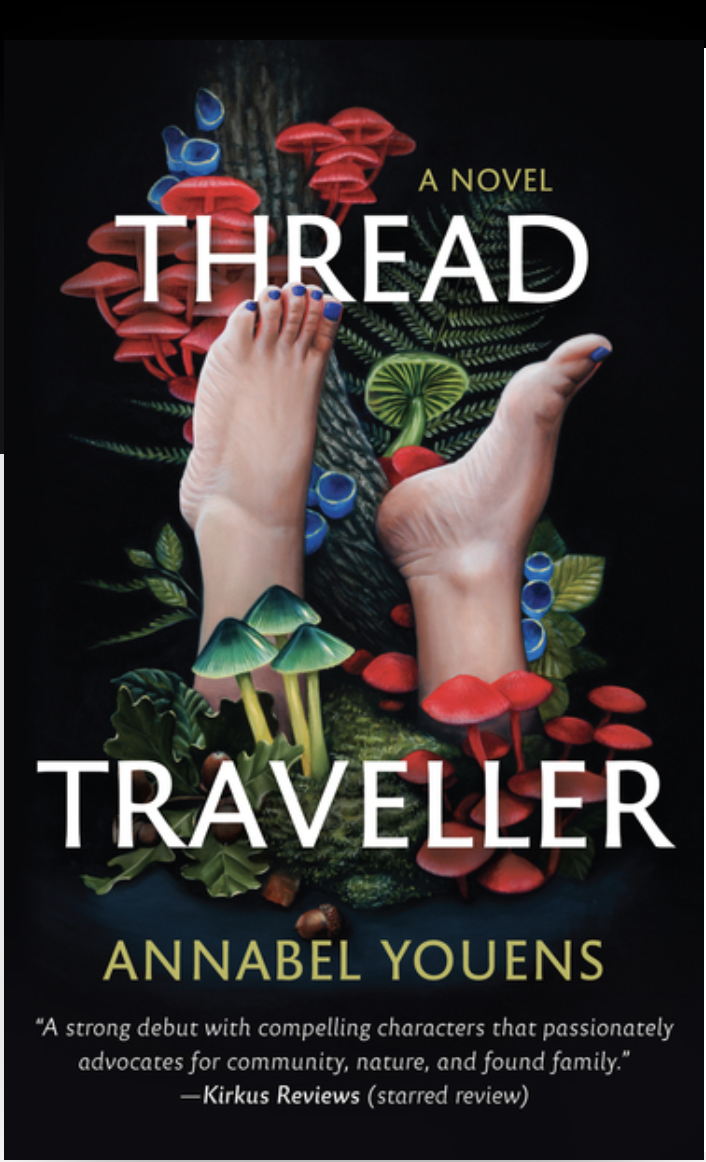
So I knew three things going in: 1) My heroine would take a sip of beer and fall into another world. 2) That world would be deeply in tune with the mycelial network — the fungal web beneath the forest floor. 3) There would be women in this world who were powerful precisely because they could speak to the mycelial network.
From the Summer 2026 edition of Gurls to the Front! A Q&A with Annabel Youens
Let's start with your journey. You got a BA in creative writing from UVic in your twenties, then stepped away from writing to work in a field where you could actually feed and house yourself. How did you decide to stop with that and come back to writing? Hopefully it wasn't as dramatic as being transported into another world.
Ha — no portal, sadly. I didn't sip a magical pint of beer, but I did experience a transformation at a birthday party.
One of my oldest friends was turning fifty, and somewhere between shots of sake he turned to me and said, "When are you actually writing this book? You've been going on about it the entire time I've known you." And he was right. I'd been talking about the book I was going to write "one day" for the better part of twenty years.
Two things happened: My competitive streak woke up; I was not going to let him be correct. Secondly, watching someone I love turn fifty put my forty-seven years into perspective. I got that if not now, when feeling, and it would not leave me alone.
So I quit my job and started writing. It felt enormously dramatic at the time, because it was dramatic. But I'd reached the point where I couldn't keep being a person who talked about writing a book. I had to become a person who'd written one.
Tell us about your publishing journey. You started your own press, which published Thread Traveller and will publish the rest of the series. How have you found it — especially the business side — having to write the books and do the marketing and distribution too?
Like most writers, I assumed I'd be traditionally published. I'd get an agent, land a massive debut novel deal, get plucked for Oprah's Book Club — obviously.
But I've co-founded two startups, and the deeper I got into how publishing works, the more I recognized the machinery. It's the tech industry in a sophisticated tweed jacket, with leather elbow patches. Agents are angel investors — they take a punt on you and, through their network, introduce you to a publishing house, which behaves exactly like a VC: if they like you, they take a bigger punt. And the whole thing runs on who you know.
I didn't want to play that game again, where I'm hoping that someone will like me and see the value in my book. I wanted to be the one to say, "My book is good!"
I'm also a control freak, and I say that with love — I wanted my hands on everything, from the cover, to the positioning, to the words on the back. So I did the obvious thing (for me) and spun up my own publishing house, Salt Line Press. I'm the only author in the stable for now, although things may change as the industry evolves.
What I love — as deeply unglamorous as it is — is being able to track things. I can watch the link clicks and actually understand what moves the needle on sales and what just feels like it should. And here's my honest note to any writer thinking about going independent: it is amazing, and it is a staggering amount of work. I know what I'm doing, and it's still exhausting. Go in with your eyes open.
That was the entire map. Everything else grew as I wrote. This is the first book in a trilogy, and I'm deep in book two now, and the world keeps getting fuller and stranger. My imagination gets to run completely off the leash, which is, frankly, the best part of my writing practice.
Tell us about Margaret — such a powerful character, a wise healer who was born intersex. How did Margaret come about as you were writing the novel?
Margaret came from two places at once. The first is a real person in my life who is intersex, and I wanted to honour and explore that experience on the page. The second is the mycelium itself — fungi are intersex too, capable of thousands of mating types. They refuse the tidy binary system we impose. I love this idea that humans and fungus are doing the same quiet, radical work.
I also wanted to explore labels — how we assume so much about a person just from looking at them, and how little we actually know about what's underneath, or what someone is carrying in a life we'll never fully see.
And honestly? Margaret is the wise woman I wish I had right now. I guess they do exist inside me — but I'd love to sit with them in my backyard over a pot of tea while they rubbed my back and told me it was all going to be fine.
Finally, what do you have in store for the rest of the series? How many books do you imagine, and are we going to meet August's best friend, Tabitha?
It's a trilogy, so there's a lot still to come. In book two, August travels again — this time with her daughter Ripley — through the mycelial network into a world inspired by Scotland. I went there on a walking holiday and there's a genuine magic in the Scottish land; you can feel it underfoot. Their national animal is a unicorn, which honestly tells you alot about the place. In Edinburgh I took a tour with a historian who walked us through the witch trials, and that — plus the landscape, plus people whose warmth reminded me so much of Canadians and Kiwis, that unforced, un-performed generosity — is pouring straight into book 2.
Book three I can only sketch for you, because of how I work. I let my imagination run and find out what happens alongside the reader. There's another portal world coming, and yes, I think August's best friend Tabitha finally shows up and goes on the journey with her. But I genuinely won't know the truth of book three until it's written. What I can promise: more adventures, more travel through the mycelium, and a much deeper understanding of this strange living technology beneath everything, and how it threads all these worlds together. I can't wait to find out how it ends myself.
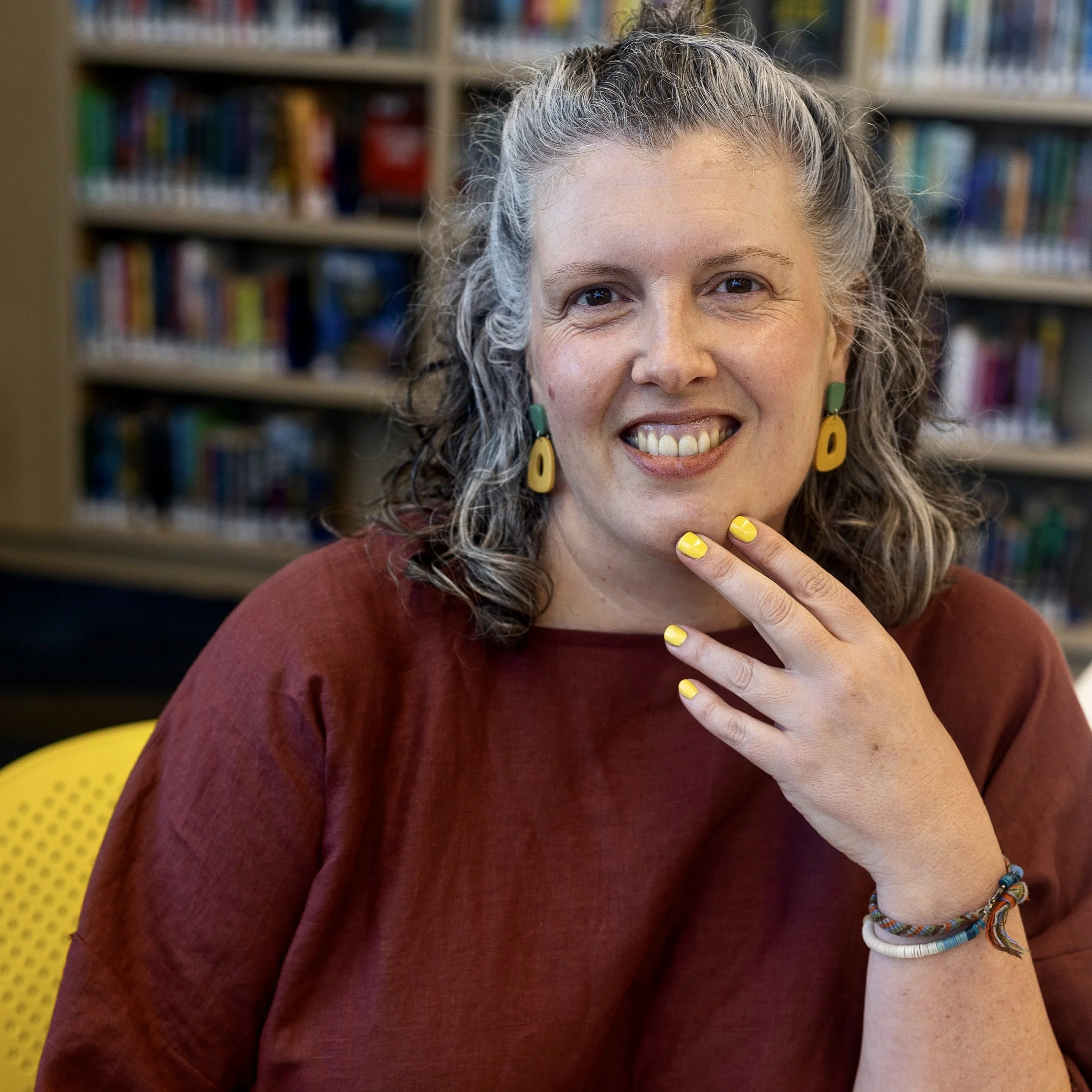
Annabel Youens writes mythic fiction where the change is the magic. Thread Traveller — a Kirkus Best Indie Book of 2025 and a 2026 CANREADS Award Finalist — is her debut novel, written at 47 after twenty years building tech companies. She was employee #11 at Abebooks.com and co-founded two global startups before returning to her first love: storytelling. She lives on Vancouver Island and writes a Substack called Saved by the Spell on midlife and motherhood. All em dashes are hers!
Thread Traveller is available in hardcover, ebook, and audiobook (narrated by Naomi Rose-Mock), wherever books are sold (like at Books & Shenanigans in Victoria) — and directly from annabelyouens.com. You can also find Annabel's writing on Substack at Saved by the Spell.